
Is Ginger Good For Cough?
- What is the role of ginger with good health?
- The medicinal properties of ginger
- What are the traditional uses of ginger for respiratory issues?
- Are there scientific studies supporting ginger's effectiveness against cough?
- Can ginger cure cough?
- What are the benefits of ginger for cough?
- What are the best ways to use ginger to prevent and cure cough and cold?
- How to make ginger tea for cough?
- Are there any potential side effects or precautions when using ginger for cough?
- Conclusion
Key Highlights
- Find out the medicinal properties and traditional uses of ginger for respiratory care that make ginger good for cough and colds
- Learn about different ways and methods to prevent coughs with the use of ginger, honey, and lemon
- Discover studies and research that support the benefits and effectiveness of ginger and how it promotes good health
- Know about the potential side effects of ginger as a cough remedy

Ginger is well-known for its natural healing properties and can be used in various ways to relieve coughs. This humble root has been a trusted remedy due to its anti-inflammatory properties and ability to relieve respiratory discomfort. Now, the big question: is ginger good for cough?
Continue reading to learn more about ginger's beneficial properties, uses, potential side effects, and more.
The role of ginger with good health
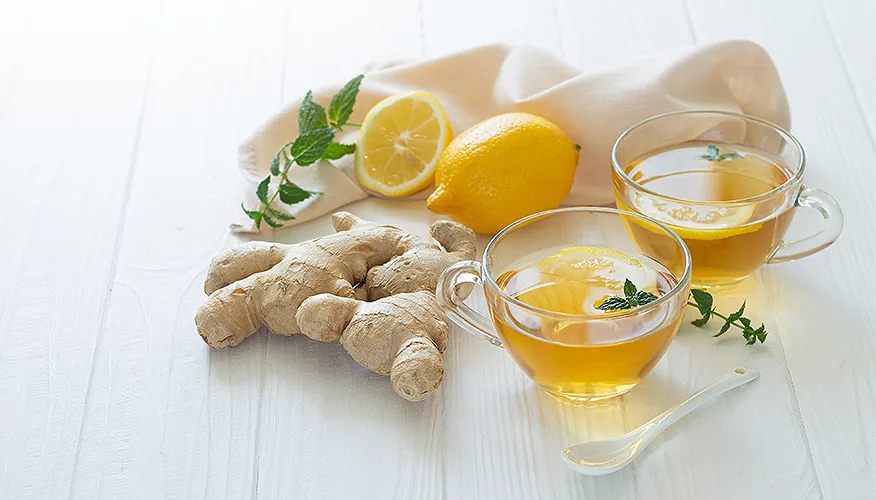
Can ginger cure cough? This question has been asked for centuries. Yes, ginger has medicinal properties to help fight a cough naturally. Ginger has numerous health benefits that can be enjoyed in a variety of ways.
Ginger isn’t just a remedy for cough and cold, but also works wonders in dealing with indigestion, stomach woes. Ginger is delicious, nutritious and can add flavor to food, support overall well-being and promotes good health.
Medicinal properties of ginger
In addition to being a culinary condiment, ginger has many medicinal properties such as:
1. Helps fight infections
- Ginger’s antimicrobial properties could make it effective against bacterial and fungal infections. It’s highly recommended to use ginger for cough with phlegm.
- Ginger is also an antioxidant that aids in the elimination of toxins, thereby preventing infections and the flu.
- In addtion, add lemon in ginger juice for cough, a remedy that has proved to be effective in many ways.
2. Helps treat indigestion
- Ginger may help with indigestion by speeding up the passage of food through the stomach.
- Eating ginger can help reduce fermentation, constipation, and other causes of bloating and intestinal gas.
3. Helps with nausea relief
- Ginger is frequently advertised as a natural way to reduce nausea and soothe an upset stomach.
- A few studies have found that the spice may be as effective as some anti-nausea medications while causing fewer side effects.
4. Helps with weight loss
- According to a National Library of Medicine study, ginger supplementation significantly reduced body weight, waist-hip ratio in individuals who were overweight or obese.
- Ginger’s ability to influence weight loss could be attributed to specific mechanisms, such as its ability to reduce inflammation.
5. May enhance brain function
- According to a National Library of Medicine study, 6-shogaol and 6-gingerol, which are compounds found in ginger, may help prevent degenerative diseases like Alzheimer's, Parkinson's, and multiple sclerosis.
What are the traditional uses of ginger for respiratory issues?
Ginger (Zingiber officinale) has been used as a spice and medicine for more than 200 years. This plant has significant medicinal and nutritional benefits and is commonly used in traditional medicine.
Let’s examine the five functions of ginger in respiratory health:
Anti-inflammatory action
- Ginger contains more than 400 natural compounds, some of which are anti-inflammatory.
- Ginger contains gingerols, a phenolic compound that acts as an anti-inflammatory agent in respiratory conditions such as bronchitis. It also helps to improve respiratory processes.
Decongestion effect
- From many decades, it’s been widely practiced to use ginger for cough with phlegm because ginger has stimulant properties that help to loosen mucus and phlegm in the respiratory tract.
- It also relieves congestion associated with the common cold, respiratory infection, and flu.
Antioxidant property
- It also has antioxidant properties, which help boost immunity and protect against oxidative damage caused by respiratory symptoms.
- This antioxidant activity helps to improve overall respiratory health.
Antitussive action
- Ginger has antitussive properties and is also used to suppress coughing, which helps lessen dry coughing.
Treatment for sore throat
Ginger water for cough has been shown to have a warming and strong flavour that helps prevent sore throats and cure coughs.
Are there scientific studies supporting ginger’s effectiveness against cough?
There are multiple studies by scientists that have examined the potential ginger benefits for cough.
Given that ginger and its metabolites appear to accumulate in the gastrointestinal tract, it is not surprising that ginger consistently has many of its effects there.
Since ancient times, ginger has been thought to have numerous potent medicinal and preventive properties to treat a variety of illnesses, from colds and coughs to cancer.
Like with many other medicinal herbs, most of the information has been passed down orally, and there is little controlled scientific evidence to support the numerous claims. However, in recent years, a greater number of methodical scientific investigations have focused on the purposes and workings of ginger and its component parts.
But in the past few years, more systematic scientific studies have concentrated on the targets and mechanisms of ginger and its constituent parts. A review of studies demonstrates ginger's efficacy as an anti-inflammatory, anti-cancer, anti-nausea, and antioxidant compound, as well as its ability to protect against various medical conditions.
A large cross-sectional study suggested that consuming ginger on a daily basis may benefit the immune system. This may help prevent chronic disease and aid in the recovery from other illnesses like the cough, common cold or flu.
Can ginger cure cough?
Ginger contains bioactive compounds. These bioactive compounds are phytonutrients found in a number of foods that have beneficial effects on health.
Studies show that these compounds have anti-inflammatory properties that can help control or reduce the risk of many diseases, including coughs and sore throats.
Because of its antibacterial qualities, ginger can aid in the treatment of bacterial and viral infections, including those that cause sore throats.
Some studies suggest that fresh ginger was found to have greater antioxidant benefits than dried ginger.
Ginger benefits for cough
- Ginger has numerous cough benefits due to its anti-inflammatory properties. The body’s immune reaction to an infection or an irritant, such as a post nasal drip, may be the trigger of this inflammation.
- Sore throats or bronchitis are usually the triggers for a cough. Ginger's anti-inflammatory properties help soothe sore throats and coughs by lowering inflammation.
- Due to inflammation, these proteins produce pain, itching, and burning in the throat. Ginger is capable of reducing the body's inflammatory proteins.
- It’s been said that ginger stimulates the immune system to destroy viruses. Ginger may be able to shorten recovery times, lessen the frequency of sore throats, and relieve symptoms faster.
So, it’s advised to have ginger juice for cough as it helps improve recovery time due to its compounds that can boost immunity.
It also helps relieve tonsil pain and sore throats. Ginger juice from leaves and roots has the same inhibitory effect on bacteria and is equivalent to antibiotics.
Best ways to use ginger to prevent and cure cough and cold

Ginger is effective for treating sore throats, coughs, and colds. It can be consumed as tea, in juice, or raw.
Some of the best ways to use ginger are:
Honey Ginger Water
- A sore throat is the most common indication that we have the flu. At this point, scrape some ginger into a pan of boiling water.
- When it comes to a boil, add honey and squeeze half a lemon, and it's done. Ginger juice and honey for cough can help relieve coughs and sore throats.
- When a sore throat occurs, ginger soothes it, and honey eases severe coughs and sore throats.
Lemon juice
- To prevent and get rid of phlegm from the body, mix some ginger and lemon juice in hot water.
- Using ginger lemon for cold, it acts as an antioxidant and helps the body expel toxins, which helps the body get rid of infections and the flu.
- Warm up ginger juice and add a squeeze of lemon. Lemons contain vitamin C, which works as an active ingredient to clear mucus and reduce pain.
Raw ginger for cough
- Ginger roots are recommended, they are typically pale brown in colour and come in a variety of sizes.
- To use, begin by removing the exterior bark-like surface. One can do this by gently rubbing a spoon across the root's surface.
- Then, cut a 1-inch (2.5 cm) piece of fresh raw ginger root and chew on it. It is safe to swallow the root as it turns to pulp, but if the pulp starts to cause irritation, remove it immediately.
- For relief, chew a piece of ginger root twice or three times per day. This is the most potent way to consume ginger due to the herb's spicy heat. It may not suit everyone.
Ginger shot for cold
- A potent combination of fresh ginger, lemon, and honey is the ideal way to beat the cold. This beverage is an immune-boosting wellness drink.
How to make ginger tea for cough?
Wondering, can ginger tea cure cough? Well, the answer is yes. Warm ginger tea is a well-liked and successful home cure for sore throats. Thankfully, it's also easy to prepare!
Here’s how to make ginger tea at home.
- Mix one cup of boiling water with two teaspoons (9.8 ml) of fresh or dried ginger.
- Before drinking, strain the liquid to get rid of the ginger after letting it steep for five minutes.
- For relief, sip ginger tea up to three times a day.
Are there any potential side effects or precautions when using ginger for cough?
Although ginger is generally considered safe for most individuals, it is possible to have a ginger allergy. Even though ginger is good for cough, it could have some side effects:
- Could Give Heartburn
- Might Lead to Bleeding
- Could Cause Diarrhea
- Perhaps Not Safe to Use While Pregnant
- Could Reduce Blood Sugar Far Too Much
- Possibility of Mouth Irritation
Conclusion
Is ginger good for cough? While there is some scientific evidence to support ginger's potential benefits, research demonstrates the herb’s effectiveness in treating cough symptoms. Studies have indicated that ginger may be a promising natural cough remedy because it has anti-inflammatory and possibly antitussive qualities.
Though individual responses to ginger may vary, it's crucial to consider potential drugs or medical conditions. Ginger is often used as a soothing supplement for respiratory discomfort; additionally, incorporating ginger into a varied and well-balanced diet may have further health benefits. Everyone can implement this age-old spice into their everyday lives to improve all-around health and combat colds and coughs naturally.
Frequently Asked Questions
An effective combination for fighting cold, coughs and sore throats - Honey, lemon and ginger. Ginger may help minimise inflammation, which causes dry coughs. Honey can help calm a sore throat and lemon can help relieve congestion.
Ginger's inherent anti-inflammatory and antioxidant qualities can help relieve coughs. Everybody should try to drink a few cups of fresh ginger tea each day to help relieve coughs.
Ginger can be consumed as tea, juice, or lozenges. One can also add raw ginger to smoothies or meals.
Ginger may help with different types of coughs, but its effectiveness varies depending on the underlying cause. Ginger can help with dry cough, coughs caused by respiratory infections, inflammatory coughs, and nausea-induced coughs.
Even though ginger is grandma's go-to remedy for congestion caused by a cough or cold, its use in children for cough relief should be discussed with their pediatrician first. Dosage and suitability may vary according to the child's age and health.
Yes, ginger is a popular natural cough remedy. It is valued for its potential anti-inflammatory, antimicrobial, and soothing properties, which can help with a variety of cough symptoms.
The appropriate amount of ginger for cough relief varies, and there is no one-size-fits-all solution. Ginger's effectiveness varies according to an individual's tolerance, the severity of the cough, and any underlying medical conditions.
Ginger is generally safe for cough relief, but caution should be exercised in certain conditions like allergies, bleeding disorders, gastrointestinal issues, pregnancy, pre-surgery, medication interactions, and age. Everybody should consult a healthcare professional before incorporating ginger into their routine especially if there are any underlying health conditions.
Pregnant women can safely consume moderate amounts of ginger, especially as a spice or for mild nausea relief. However, it’s always better to consult healthcare providers for personalized advice, as every pregnancy is unique.

Dr. Naveeda Adam
Dr Naveeda Adam is currently Medical Officer of the Gastrology Department at the Muhimbili National Hospital, Dar es Salam, Tanzania.
Did you like our Article?
Excited
0
Happy
0
Not Sure
0
Silly
0
- The effects of ginger intake on weight loss and metabolic profiles among overweight and obese subjects: A systematic review and meta-analysis of randomized controlled trials
- Evaluation of daily ginger consumption for the prevention of chronic diseases in adults: A cross-sectional study
- The Amazing and Mighty Ginger - Herbal Medicine - NCBI Bookshelf
- How Ginger Can Help With a Cold
- Ginger Benefits
- Is Ginger Water Effective for Cough?
- Ginger Uses and Benefits
Our team of experts frequently monitors developments in the health and wellness field, and we update our articles when new information becomes available.
Current Version
May, 31 2024
Written By
Dr. Naveeda Adam
May, 17 2024
Written By
Dr. Naveeda Adam


Leave a Comment