
Exercises For An Easier Labour And Quicker Recovery
Key Highlights
- Regular exercise during pregnancy has numerous benefits, including reducing common pregnancy problems and improving overall health. It is generally safe for healthy pregnancies and does not increase the risk of complications.
- Consultation with a doctor is crucial to ensure the safety of both the mother and the baby during exercise.
- Professional guidance from a physical therapist can contribute to a more comfortable pregnancy and prevent potential health issues.
- Antenatal exercises and techniques mentioned in this article include Shoulder Circles, Leg Extensions, Office Sit-Ups, Pelvic Muscle Exercises, and Yoga Poses.

Exercises To Ease Your Pregnancy
Did you know that staying active during pregnancy can help you and your little one? Yes, regular exercise during pregnancy has numerous benefits, including reducing common pregnancy problems and improving overall health. 1-4 It is generally safe for healthy pregnancies and does not increase the risk of complications. However, it's important to consult with your doctor to ensure that any exercise you do is safe for you and your baby.
Running a marathon requires preparation and training, just like childbirth. The process of pregnancy, labour, and delivery can be equally, if not more, demanding on the body. Considering your busy schedule, with work, possibly taking care of other children, and spending time with loved ones, it may seem challenging to find time for additional exercise.
However, unlike marathon training, you don't need to dedicate endless hours to it. By practicing a few simple exercises and techniques, you can alleviate pain and discomfort while preparing your body for the journey of bringing a child into the world. Similar to how runners have coaches to guide them, you don't have to go through this alone.
A physical therapist can assist you in staying comfortable during pregnancy and labour while also preventing potential health issues in the future. It's important to understand the role that physical therapists play in pregnancy and postpartum care. Additionally, we will explore five exercises and techniques that you can incorporate into your routine to help prepare your body for the challenges of labour and delivery.
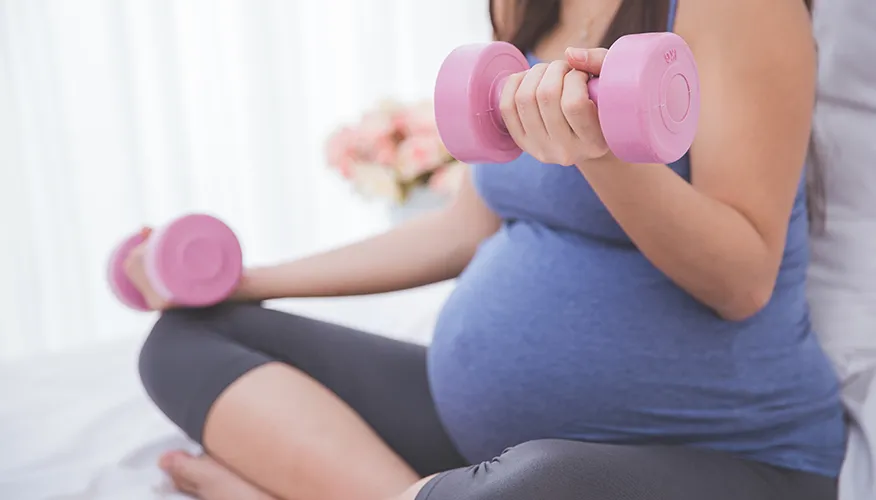
This article will introduce some common antenatal exercises that can be followed to facilitate a smooth labour experience.
1. Shoulder Circles
Get ready to give those rounded shoulders a break and relieve some tension with this exercise! Take a seat and get those shoulders rotating backward and downwards in the biggest circles you can make. And don't forget to breathe!
2. Leg Extensions
Power up those thighs for active labour with leg extensions! Before you start, it's important to 'zip up'! What does that mean? Imagine a thread attached to your belly button that's pulling it toward your spine. This helps activate your core muscles and stabilizes your spine, protecting your back and stomach. Now, sit on a chair with feet hip-width apart, lift one knee while keeping it bent, and slowly straighten the leg without locking the knee. Bring it back down and repeat on both sides 8-12 times. Easy!
3. Office Sit-Ups
Tone your legs and glutes with office sit-ups! Start by sitting in your chair with your feet hip-width apart and facing forward. Now 'zip up' and slowly stand up, putting your weight on your heels and keeping your shoulders down. Make sure to keep your pelvic floor and abdominals tight as you stand up. Once you stand, slightly bend your knees and lower yourself back into the chair, pushing your buttocks towards the back of the seat. Then, repeat the movement six times, take a 30-second break, and gradually work your way up from there.
One word of warning: If your chair has wheels, make sure to wedge it so it doesn't roll away while you're exercising.
4. Quadruped Cat/Cow
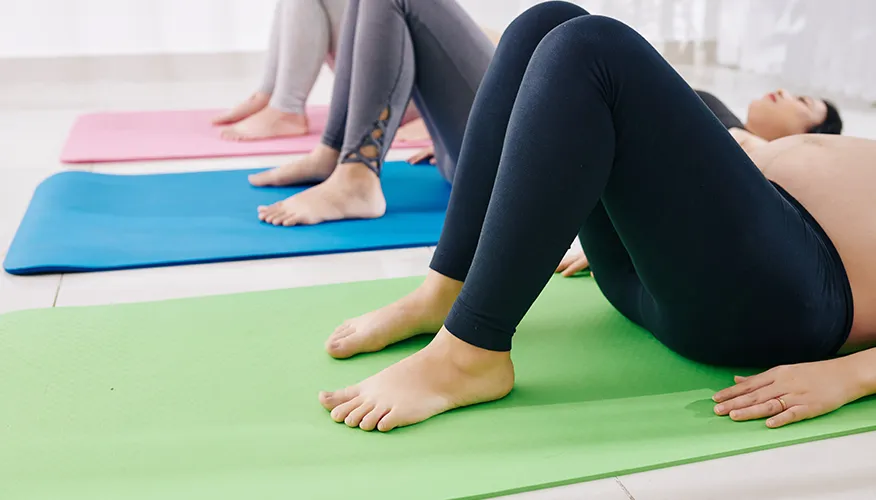
Get down on all fours and loosen up your lower back with this yoga move. As you exhale, round your spine and tuck your chin in, then inhale and arch your back gently while looking up. This can help alleviate discomfort and lower back pain.
5. Pelvic Muscles Exercise
Your pelvic floor muscles support and surround all the important organs in your pelvis, including your bladder, bowels, and womb.4 Pregnancy hormones and baby weight can strain your pelvic floor muscles. This can lead to some leakage when you cough, sneeze, laugh, or exercise! But don't worry, you can strengthen your pelvic floor muscles with exercises that can help you control accidents, ease labour, and recover faster after birth. Let me introduce you to two pelvic muscle exercises.
6. Pelvic Tilt
Get ready to strengthen your pelvic floor and support your growing baby while preventing back and pelvic pain with this simple exercise. Start by sitting up tall with your feet firmly planted on the ground. Then, tighten your pelvic floor muscles and gently squeeze your glutes, curling your tailbone under you. Hold for 5 seconds, then release gently. Do this 10 times for a great workout!
7. Pelvic Floor Exercise
To perform pelvic floor exercises, squeeze the muscles around your anus and vagina and hold them tight for 8 seconds. Then, relax for 8 seconds. Repeat as many times as you can, aiming for 3 sets of 8 to 12 squeezes each day. Keep your thighs and buttocks relaxed and don't hold your breath. You can do them lying down, sitting, or standing. Let's get those muscles strong!
8. Child's Pose
Child's Pose in yoga helps lengthen pelvic floor muscles and ease discomfort. Kneel down and sit on your heels. Lean forward, extending your arms in front of you. You can also rest your elbows on the ground with hands supporting your head. Adjust knee spacing as needed. Avoid raising hips above heart. Consult a physical therapist for personalized guidelines.
9. Perineal Massage
Perineal massage stretches and softens perineal tissues. Start at 35 weeks, massage for 10 minutes daily. Prioritize relaxation with warm bath or compress. Sit or lean back comfortably. Apply lubricant to thumbs and perineum. Insert thumbs inside vagina, press downward and to the sides. Hold pressure for two minutes until numb. Massage in a U-shaped motion for three minutes. Repeat once.
10. Butterfly Stretch
Butterfly Stretch strengthens and stretches back, thigh, and pelvic muscles, improves posture, joint flexibility, blood flow, and eases delivery. Sit with straight back, soles of feet together, and knees dropped. Use elbows to gently press knees toward floor. Hold for 10-15 seconds, repeat 5-10 times. Use wall for back support if needed.
Conclusion
In conclusion, staying physically active during pregnancy can be incredibly beneficial for both you and your baby. It can improve your overall health, prevent common pregnancy problems, and help you build endurance for labour.
However, it is crucial to consult with your doctor before engaging in any exercise routine and to listen to your body, stopping immediately if you experience any discomfort. Remember, maintaining your health during pregnancy is important, but the safety and well-being of you and your baby should always come first.

Dr. Stefanenko Irina Borisovna
Dr. Stefanenko Irina Borisovna Is a medical doctor based out of Ukraine. Dr. Borisovna graduated from the Vinnitsa State Medical University, in 1995. In between 1995-2000, Dr. Borisovna went on to further pursue her post graduation studying scientific activity from the Vinnytsa Medical University in Ukraine.
Did you like our Article?
Excited
0
Happy
0
Not Sure
0
Silly
0
- Exercise during pregnancy [Internet]. ACOG. [cited 2023Apr11].
- 5 exercises and techniques to train for childbirth: Your pregnancy matters: UT southwestern medical center [Internet]. Your Pregnancy Matters | UT Southwestern Medical Center. [cited 2023Apr11].
- Pelvic floor exercises [Internet]. Pregnancy, Birth and Baby. [cited 2023Apr11].
- Editor. Effects of exercise during pregnancy [Internet]. American Pregnancy Association. 2022 [cited 2023Apr11].
- A guide to pelvic floor exercises [Internet]. Tommy's. Together, for every baby. [cited 2023Apr11].
- 5 easy office exercises to do when you're pregnant [Internet]. Tommy's. Together, for every baby. [cited 2023Apr11].
- Pregnancy yoga: Poses for the Third trimester [Internet]. The Art of Living; 2022 [cited 2023 May 19].
Our team of experts frequently monitors developments in the health and wellness field, and we update our articles when new information becomes available.
Current Version
Dec, 07 2023
Written By
Dr. Stefanenko Irina Borisovna


Leave a Comment